
Functional Kitchen Corner Ideas
Kitchen corners are deceptive. On a floor plan, they look like an opportunity. In reality, they’re often the source of the most frustration in an otherwise well-designed kitchen. I’ve seen corners make or break how a kitchen functions day to day, and the difference always comes down to planning with intention instead of defaulting to whatever cabinet is easiest to order. Let’s walk through the most common kitchen corner solutions, what they’re actually good at, and where they fall short—so you can decide what works best for your kitchen.
1/24/20264 min read


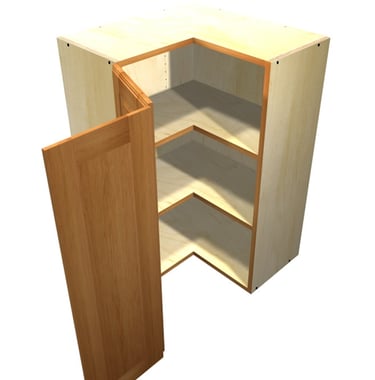
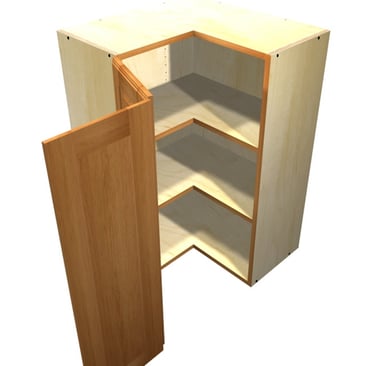
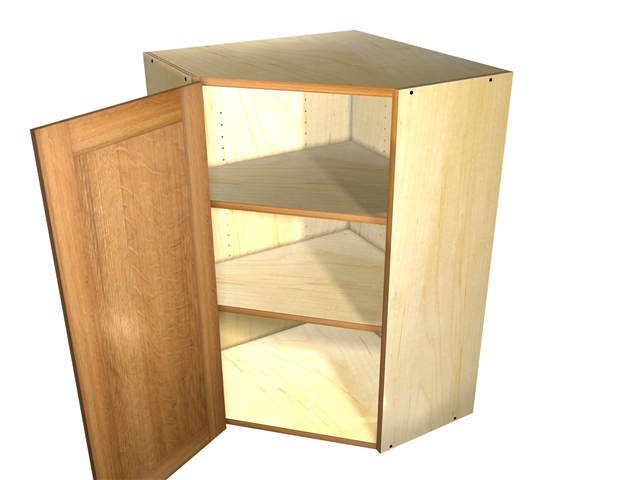
The 90° Corner Base Cabinet: Maximum Storage, Maximum Compromise
The classic 90-degree corner base cabinet is the most common option for a reason: it holds a lot. This cabinet captures space that would otherwise be wasted and delivers unapologetic storage capacity. If your priority is volume, this cabinet wins every time.
That said, access is the trade-off. The depth and low placement mean the front of the shelf becomes prime real estate, while the back turns into a forgotten zone. Items migrate forward, stacks become unstable, and things in the back are often abandoned altogether.
If you’re comfortable using this cabinet for long-term storage—large pots, rarely used appliances, bulk items—it’s an excellent solution. Just don’t expect convenience. And don’t assume an insert will magically solve accessibility if storage is your main goal.
Lazy Susan Cabinets: The Bare Minimum Upgrade
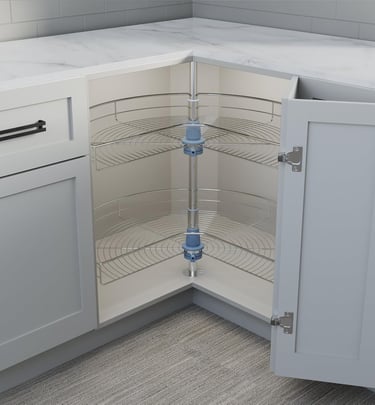
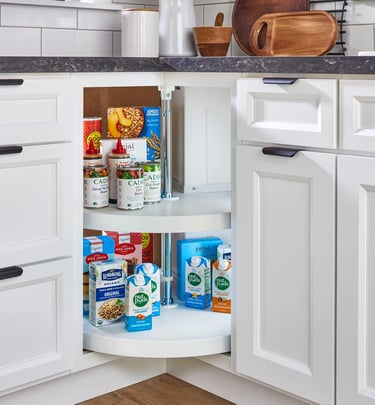
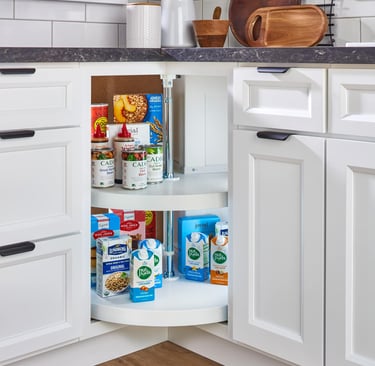
A lazy Susan is often seen as the default “fix” for corner cabinets, and while it does sacrifice some usable space, it dramatically improves access. This alone makes it worth considering.
The most important distinction here is how the trays are mounted. A center-pole system with floating trays allows better reach and easier recovery if something falls off the back. Fixed shelves with mounted trays look fine on paper but quickly become frustrating in real use.
Door swing matters here more than most people realize. Poor planning can lead to doors colliding with ranges or dishwashers, turning an already tricky cabinet into a daily annoyance. Thoughtful layout makes all the difference.
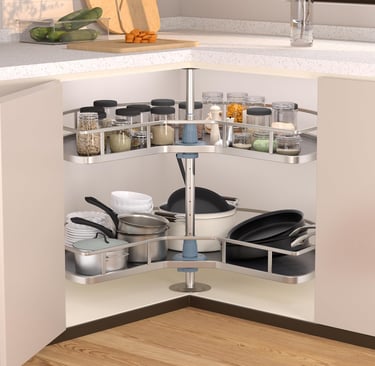
Rotating Pull-Out Corner Systems: Ambitious but Complicated
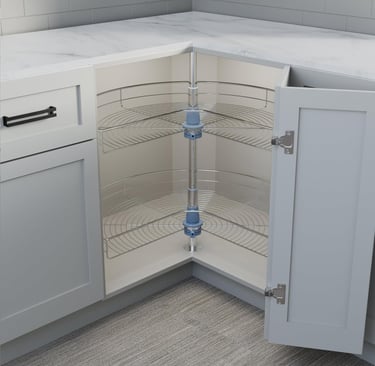
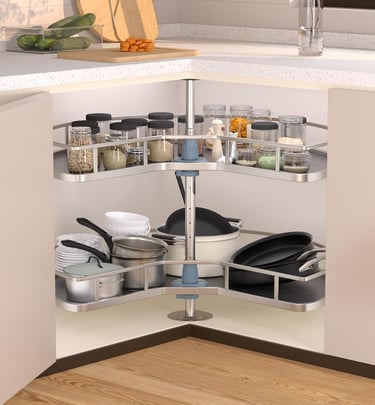
These complex rotating systems are designed to reclaim more space than a lazy Susan while improving accessibility. They’re impressive, no question about it, and they often appeal to homeowners who want “the best of both worlds.”
In practice, they’re a mixed bag. Installation can be tricky, the mechanisms are substantial, and if something falls behind the system, retrieval can be a challenge. Still, for those who value access and are willing to trade simplicity for functionality, these systems can work well.
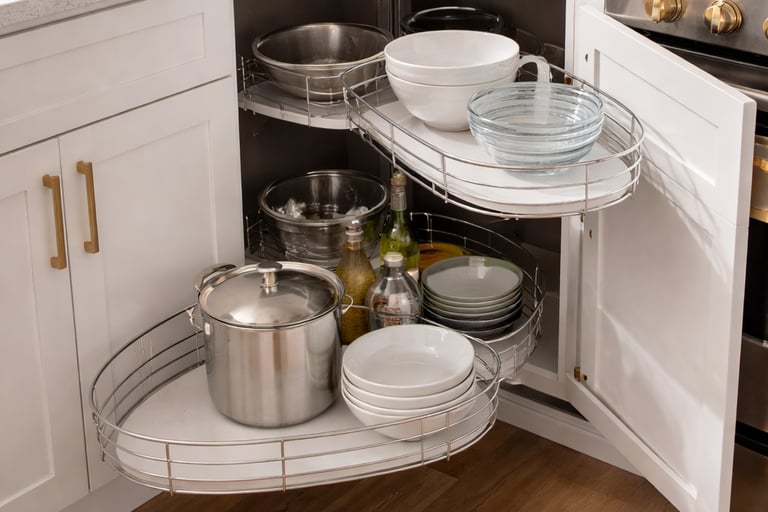
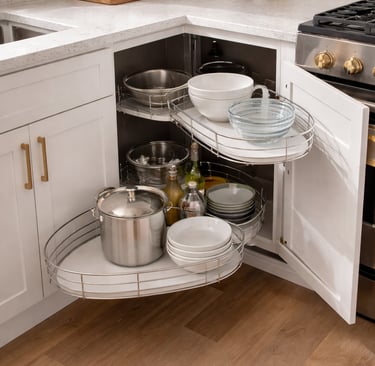
Blind Corner Cabinets: The Most Misunderstood Option
Blind corners exist to improve layout flexibility elsewhere, not because they’re inherently functional. Without an insert, they’re essentially unusable. The hidden portion of the cabinet is difficult to access and often becomes dead space.
That said, blind corners can be redeemed.
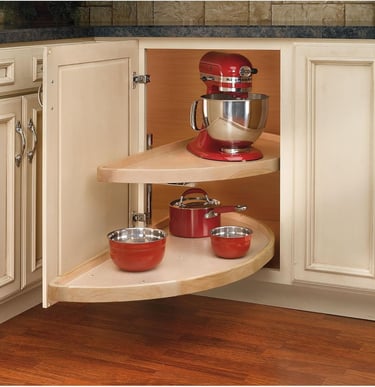
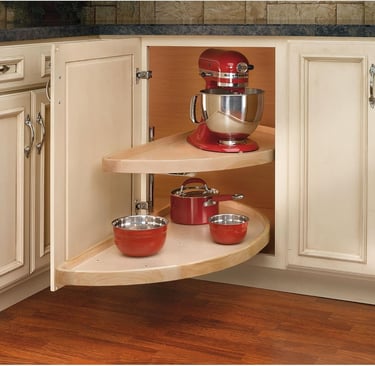
Half-Moon Lazy Susan Inserts
This is the entry-level solution. It improves access slightly, but it also reduces usable space due to its shape. It’s better than leaving the cabinet empty, but it’s not the most efficient option available.
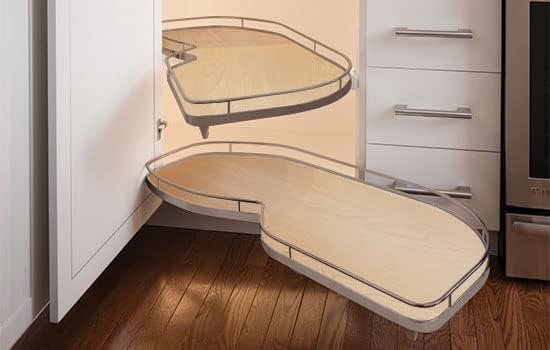
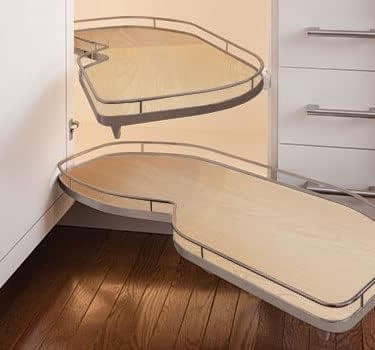
Lemans Pull-Out Systems
These systems are a significant upgrade. Their shape captures more usable space and makes retrieving items far easier. They cost more, but they deliver real functional improvement and are often the sweet spot between cost and usability.
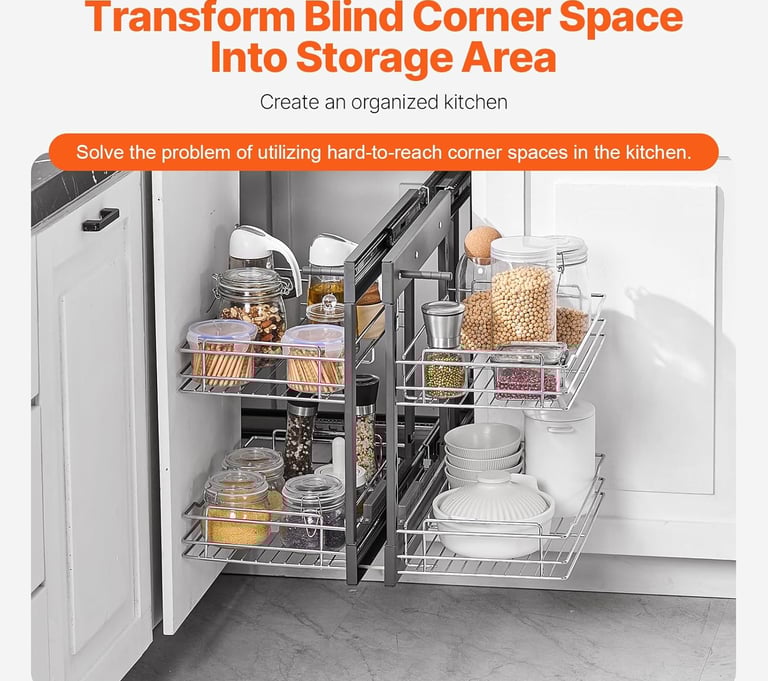
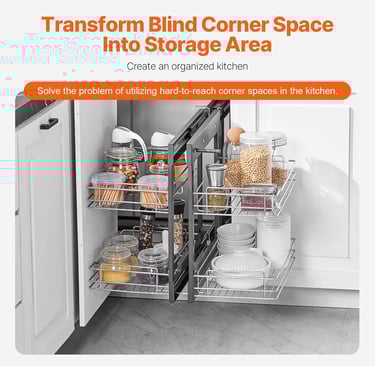
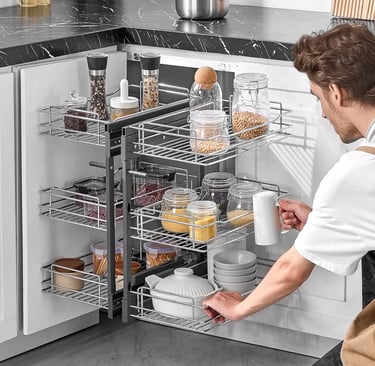
Magic Corner Systems
If maximizing access is the goal, this is the top-tier solution. These systems bring nearly the entire cabinet contents out into view. They’re expensive, but for homeowners who refuse to waste space, they’re hard to beat. Thoughtful storage choices are key here—small items that fall behind hardware can quickly undo the convenience.
Corner Drawers: Stylish but Space-Hungry
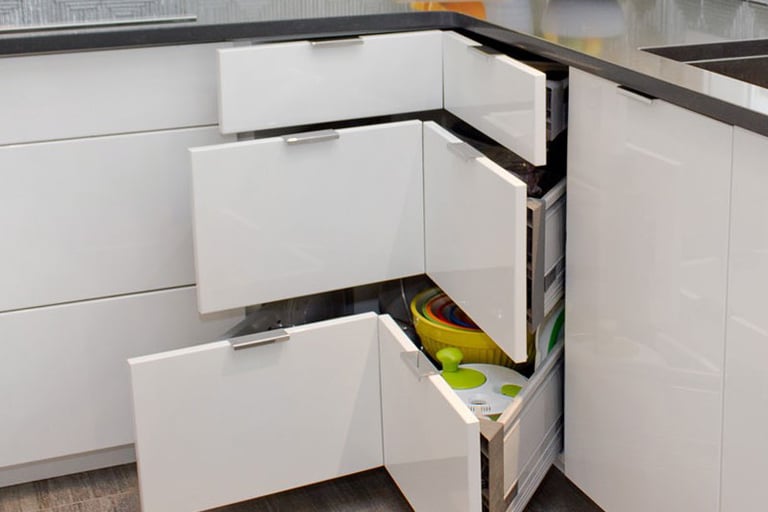
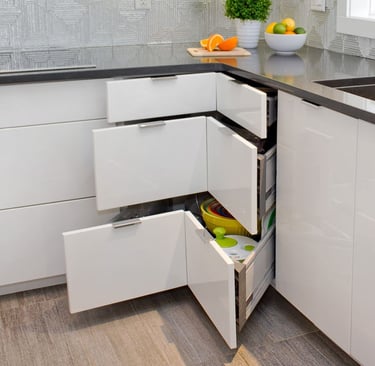
Corner drawers are visually appealing and easy to access, but they lose a surprising amount of storage due to their shape. They’re best suited for homeowners who value clean design and accessibility over raw capacity. They’re functional—but not efficient.
Pull-Out Roller Shelf Systems
This newer corner solution replaces spinning trays with straight pull-out shelves mounted on rollers along the side wall of the cabinet. Instead of rotating items deeper inside the corner, the entire shelf glides forward, bringing contents fully into view.
Lesser-Known Corner Uses
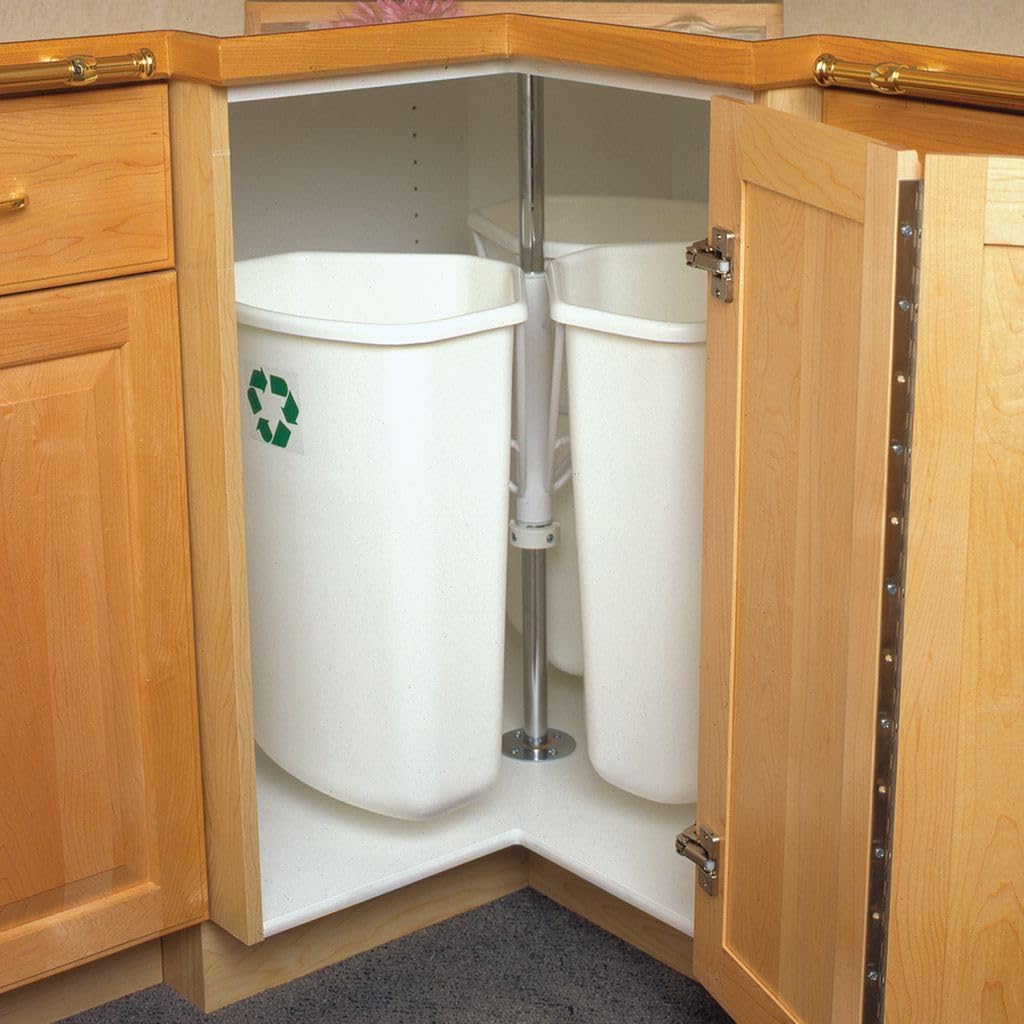
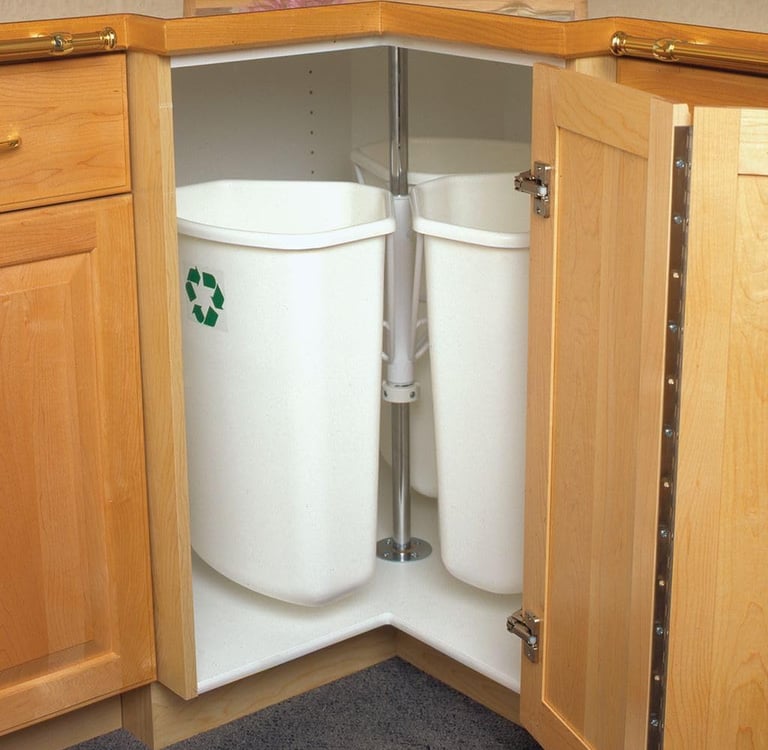
Corner Recycling or Trash Centers
This is a practical solution, but it comes at a cost. Corners are valuable real estate, and dedicating one entirely to waste management isn’t always the best use of space unless layout constraints demand it.
High-End Specialty Mechanisms
These systems are rare, expensive, and undeniably impressive. They reclaim space in creative ways, but they’re typically chosen for novelty rather than necessity.
The Most Effective Corner Solution (That Few People Expect)
Blocking off the corner entirely is often the smartest move. Doing so allows adjacent cabinets to become wider, more functional, and easier to use. In many kitchens, this results in more usable storage overall, even though the corner itself disappears.
This approach simplifies the layout, improves workflow, and eliminates the compromises that come with traditional corner cabinets. It’s not for everyone—but when it works, it works exceptionally well.
Final Thoughts
There’s no universally “right” corner solution. The key is aligning expectations, budget, and how you actually use your kitchen. Corners demand intention. When planned thoughtfully, they can support your kitchen instead of quietly sabotaging it.
If you’re reworking a kitchen layout and want to make sure your corners work as hard as the rest of the space, this is exactly where professional planning pays off.